Marble Flooring 2026: Price, Types, Maintenance & FAQs India
What is Marble?
When limestone stays deep inside the earth under extreme heat and pressure for millions of years, the resulting metamorphic stone is called marble. This natural process creates beautiful veins and unique patterns in the stone.
Due to its natural beauty, durability, and classic look, marble is widely used in both luxury and commercial projects.
Marble Uses: Flooring, Kitchen & Bathroom
- Flooring: Living room, bedroom, prayer room (puja ghar).
- Kitchen Countertop: With proper sealing.
- Bathroom: Walls and vanity tops.
- Other Uses: Stairs, feature walls, TV panels, and wall cladding.
Marble Types & Price in India 2026
1. Indian Marble
| Type | Origin | Main Use | Price (Rs./sq ft) |
| Makrana White | Rajasthan | Flooring, Temples | Rs.150 – Rs.400 |
| Agariya White | Rajasthan | Flooring | Rs.60 – Rs.180 |
| Morwad White | Rajasthan | Flooring | Rs.70 – Rs.160 |
| Green Marble | Rajasthan | Accent Walls | Rs.35 – Rs.150 |
| Toronto Brown | Rajasthan | Interiors | Rs.35 – Rs.150 |
| Jaisalmer Yellow | Rajasthan | Outdoors, Elevation | Rs.90 – Rs.200 |
“Before buying marble, it is essential to set a proper budget, take accurate measurements, and perform a quality check. To learn these steps in detail, be sure to read our blog: ‘The Ultimate Marble Buyer’s Checklist: Buy Right, Ensure Zero Wastage.’“
Which marble is best for home flooring in India?
For home flooring in India, the best marble options depend on your budget and preference. Morwad White is the most popular choice for budget-friendly flooring — it is durable, clean-looking, and widely available. Toronto Brown is ideal for those who want a warm, earthy tone that hides dust and footprints easily. For premium flooring, Aarna White (also known as Albeta) gives a bright, luxurious finish perfect for living rooms and bedrooms. If you want the finest and most prestigious option, Makrana White — the same marble used in the Taj Mahal — is unmatched in elegance and longevity.
“Our years of experience tell us that if you want affordable marble for your home, Morwad White is the best. If you are looking only for marble options for kitchen countertops, Green Marble is a good choice—though overall, granite remains better for kitchens. For the outdoors, nothing beats Jaisalmer Yellow.“
2. Imported / Italian Marble
| Type | Origin | Main Use | Price (Rs./sq ft) |
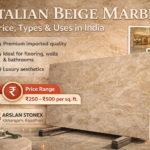
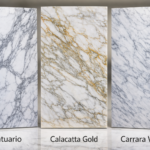
| Calacatta Gold | Italy | Luxury Flooring | Rs.450 – Rs.3,500 |
| Statuario | Italy | Feature Walls | Rs.450 – Rs.4,500 |
| Armani Brown | Italy | Living Room | Rs.300 – Rs.800 |
| Pietra Grey | Iran | Bathrooms, Walls | Rs.250 – Rs.600 |
| Breccia Aurora | Italy | Luxury Interiors | Rs.300 – Rs.1,500 |
“If you are looking for current Italian marble prices and a detailed cost breakdown for Statuario, Calacatta Gold, and Carrara White, our comprehensive guide, ‘Italian Marble Price India 2026,’ will be an invaluable resource for you.”
Pro Tip:
For a premium look, Statuario and Calacatta Gold are the finest. However, for affordable Italian luxury, Burberry Beige and Grey Marble are today’s smartest and most ‘pocket-friendly’ options.
Marble FAQs — People Also Ask
Marble Basic Information
How many types of marble are there?
Marble is mainly of two types—Indian Marble and Imported Marble. Indian marble includes Makrana White, Morwad White, Albeta, and Jaisalmer Yellow. Imported marble includes premium stones like Calacatta Gold, Statuario, and Armani Brown.
Where is marble found in India?
In India, marble is mainly found in Rajasthan, especially in the Makrana and Kishangarh regions. Because of this, Rajasthan is also called the “Marble Capital” of India.
How to identify marble quality?
The surface of good quality marble is uniform, crack-free, and has a good polish. If water is absorbed quickly when poured on the surface, the marble is considered more porous and of relatively lower quality.
“One more simple test: apply a little lemon juice to a corner of the marble. If the surface reacts or becomes dull, the marble is genuine and natural. Artificial or coated stones typically do not react.”
Marble Durability & Strength
Between marble and granite, which is more durable?
Granite is more durable than marble. On the Mohs hardness scale, granite scores 6–7 while marble is around 3–4. Therefore, granite is better for kitchens and high-traffic areas.
Does marble scratch?
Yes. Marble is a relatively soft stone, so it can get scratched by sharp objects. It is considered more suitable for low-traffic areas like living rooms and bedrooms.
Does water affect marble?
Yes. Marble is a porous stone, so it can absorb water. Proper sealing can make it water-resistant to a large extent.
“A minimum thickness of 14mm is recommended for marble flooring. Thinner slabs (12mm) can easily crack under heavy furniture or in high-footfall areas.”
Marble Technical Details
How much does marble weigh?
A standard 18mm marble slab weighs about 42–46 kg per square meter, which is slightly lighter than granite.
How many types of marble polishing are there?
Marble generally comes in these finishes:
- Polished: Mirror-like shine.
- Honed: Matte finish, for bathroom floors.
- Brushed: Antique texture.
- Sandblasted: For outdoor applications.
What are the grades in marble?
Marble is generally available in three grades:
- Grade A: Premium quality, uniform veins.
- Grade B: Slight color variations.
- Grade C: Commercial use and budget projects.
Marble Price & Investment
What is the cost to install marble?
Marble installation costs are generally:
- Flooring installation: Rs.20–Rs.50 per sqft.
- Kitchen countertop fitting: Rs.40–Rs.80 per sqft.The total cost also includes the stone price, cutting, and sealing.
Marble vs Vitrified Tiles — which is better?
Marble is natural, cool, and gives a premium look, while vitrified tiles are cheaper and uniform. Marble is a better choice for luxury interiors, and tiles are better for budget projects.
Marble vs Granite — which is better in resale value?
Both stones increase property value. Italian marble gives more value in luxury homes, while granite seems more practical to buyers for kitchens and high-traffic areas.
Room-Wise Stone Selection Guide India
Which stone should be used in which room?
- Living room / Bedroom: Marble
- Kitchen / Stairs: Granite
- Bathroom: Marble or Granite (honed finish on the floor)
- Outdoor areas: Granite or Jaisalmer Yellow marble
Marble or Granite for home — which is best?
Both stones have their own uses. Marble is known for luxury and elegance, while granite is considered better for durability and practicality.
- Is marble eco-friendly? Yes. Marble is a 100% natural metamorphic stone that contains no chemicals, making it an eco-friendly and sustainable flooring option.
- Granite vs Marble — which stays cooler in an AC room? Both stay naturally cool, but marble feels slightly cooler. This is why marble flooring is more preferred in states with hot climates.
- Natural stone vs Artificial stone — which is better? Natural stones like marble and granite are more durable, eco-friendly, and increase property value compared to artificial stones—though artificial stones are cheaper and uniform.
Arslan Stonex — The Symbol of Trust and Transparency
Which is the most trusted place to buy marble and granite?
Arslan Stonex, Kishangarh (Rajasthan), sources marble and granite directly from India’s largest natural stone hub. Both Indian and Imported premium stones are available here at competitive prices with a full quality guarantee.
“Before buying marble, make sure to read this essential guide — ‘Kishangarh Marble Market Scams 2026: The 144 vs. 114 Billing Trick Exposed‘ — to protect yourself from fraud and overcharging.”
Granite Flooring & Countertop 2026: Price, Types & FAQs India
When molten magma deep inside the earth cools down slowly over millions of years, a very strong stone is formed called granite. It is a type of Igneous Rock, mainly composed of minerals like Quartz, Feldspar, and Mica. The mixture of these minerals forms this hard stone.
The large crystals of these minerals give granite its grainy texture, strength, and natural shine. This is why granite is considered one of the strongest and most durable natural stones in the world.
Granite Uses: Kitchen, Flooring & Outdoor
- Kitchen Countertops: Best for protection against hot utensils and scratches.
- Flooring: A long-lasting option for high-traffic areas and homes.
- Staircases: Best for strength and slip-resistant finish.
- Wall Cladding: To give luxury and protection to the exterior walls of buildings.
- Bathroom Vanities: Useful for bathrooms due to low water absorption.
- Monuments: For memorials and statues because it does not deteriorate for years.
Granite is known for its durability and heat resistance. Its most common use is in kitchen countertops, durable flooring, and exterior wall cladding.
“Arslan Stonex has been the largest supplier of granite for residential and commercial projects for several years. Granite is a ready-to-use product known for its strength. If you are looking for the best black granite for your kitchen, these three options are the best:
- Premium Range: Black Galaxy Granite – It has golden dots that give a luxury and sparkling look.
- Mid-Range: Absolute Black Granite – This is a solid jet-black stone perfect for modern and minimalist kitchens.
- Low Range: Rajasthan Black (Blue Dot) – This is the strongest and most budget-friendly option, best for daily use.
If you are looking for the best stone for your kitchen, our blog ‘Best Kitchen Countertop Stone’ will provide full help. It will prove to be a milestone for you in making the right choice.”
Granite Price List India 2026
The price of granite depends on its color, quarry, slab thickness, and finish. Below is an updated price list for 2026:
| Category | Price Range (Rs./sq. ft.) | Popular Varieties |
| Budget Granite | Rs.50 – Rs.100 | P-White, Rosy Pink, R-Black (Blue Dot) |
| Mid-Range Granite | Rs.100 – Rs.180 | Steel Grey, Tan Brown, Alaska Pink |
| Premium Indian Granite | Rs.180 – Rs.350 | Black Galaxy, Absolute Black, Alaska White |
| Imported/Exotic Granite | Rs.400 – Rs.1,000+ | Brazilian Blue, Magma Gold, Blue Pearl |
Main factors determining granite cost:
- Rare Colors: Blue, Green, and Pure White shades are always premium.
- Thickness: 16-17mm (Flooring) is cheaper, while 18-20mm (Kitchen) is more expensive.
- Finish: Polished is standard; Leather or Lapatro finishes cost Rs.20–Rs.40 extra.
- Slab Size: Large (Jumbo) slabs are more expensive because they have fewer joints.
- Logistics: Sourcing directly from Kishangarh is 15-20% cheaper than showrooms.
“How to calculate the total costing of marble or granite for your home? For this, take help from our special guide ‘The Ultimate Buyer’s Checklist‘, which will be a milestone in creating the right budget for you.”
What is Granite?
Granite is a natural Igneous Rock formed by the slow cooling of molten magma deep inside the earth. It mainly contains Quartz, Feldspar, and Mica minerals which give it a grainy texture, strength, and natural shine.
How is Granite formed?
Granite is formed when molten magma present deep inside the earth cools down slowly over millions of years. In this process, large crystals of Quartz, Feldspar, and Mica are formed which make granite strong and durable.
How many types of granite are there?
Granite is mainly divided into different types based on color and origin.
- Black Granite: Absolute Black, Galaxy Black, Black Pearl
- White Granite: Platinum White, Kashmir White, Colonial White
- Brown Granite: Tan Brown, Brazil Brown, Coffee Brown
- Grey Granite: Steel Grey, Thunder White, Silver Grey
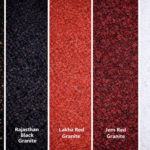
- Red Granite: Imperial Red, Ruby Red, Multicolour Red
What is the difference between Granite and Marble?
Granite is an Igneous Rock while marble is a Metamorphic Rock. Granite is harder, more durable, and less porous, while marble looks more elegant but is relatively less strong.
Granite Durability & Strength
Which is more durable, Granite or Marble?
Granite is more durable than marble. On the Mohs hardness scale, granite is 6–7 while marble is 3–4, so granite handles scratches and heavy use better.
Is Granite stronger than Marble?
Yes. Granite’s interlocking crystal structure protects it from cracking and surface damage, making it one of the strongest natural stones.
Which stone is more heat resistant?
Granite is more heat resistant than marble. Hot utensils can be placed directly on granite, whereas heat marks can appear on marble.
Is Granite scratch resistant?
Yes. Granite is highly scratch resistant. Common kitchen knives and utensils do not scratch it; only diamond tools can.
Does water affect Granite?
Granite is less porous, so it doesn’t absorb water quickly. With proper sealing, it becomes quite water-resistant.
Granite Kitchen Use & Countertop Guide
Which granite is best for flooring?
For home flooring, P-White Granite (Platinum White) is the most popular budget-friendly choice — bright, clean, and extremely durable. Rozy Granite (Rosy Pink) is a top pick for bedrooms and pooja rooms due to its warm pink tone and affordability. Cheema White Granite is preferred for modern homes because of its subtle pattern and premium finish. All three are hard, scratch-resistant, and handle heavy foot traffic with ease — making granite an excellent long-term flooring investment.
Is Granite good for kitchen countertops?
Yes. Granite is an ideal stone for kitchen countertops because it is heat resistant, scratch resistant, and relatively stain resistant.
“Wondering which stone is best for your kitchen? Don’t worry—Arslan Stonex is here to help. In countless homes today, meals are being prepared on stones handpicked by us. To assist you, we have written a short article, ‘Best Kitchen Countertop Stones: A Complete Guide,’ which will prove to be a milestone in helping you make the right choice.”
Which Granite is best for an Indian kitchen?
Popular choices for kitchen countertops in India:
- Absolute Black: Classic look, easy maintenance.
- Tan Brown: Warm tone, stains are less visible.
- Galaxy Black: Premium sparkle finish.
- Platinum White: Bright modern look.
- Brazil Brown: Imported premium finish.
Granite or Marble for the kitchen — which is better?
Granite is considered better for the kitchen because it is more durable, heat resistant, and stain resistant.
Black Granite vs White Granite — which is better?
Black granite is more stain-resistant and low maintenance, while white granite gives a modern and spacious look but stains may show easily.
What is the difference between Granite and Quartz?
Granite is 100% natural stone while Quartz is an engineered stone. Quartz is non-porous, but granite is more heat resistant.
Granite Commercial & Outdoor Use
Is Granite good for high-traffic areas?
Yes. Granite is widely used in commercial spaces like hotels, malls, offices, and airports because it can withstand heavy foot traffic.
Is Granite good for stairs?
Yes. Granite is an ideal stone for staircases because its hardness prevents edge chipping.
Can Granite be installed outdoors?
Yes. Granite handles UV exposure, rain, and temperature changes well, making it suitable for outdoor flooring and cladding.
Does Granite fade in the sun?
No. Granite’s color remains stable for decades and is resistant to UV fading.
Is Granite good for bathrooms?
Yes. Granite is a good choice for bathroom floors, walls, and vanity tops. For bathroom floors, a flamed or honed finish is better.
Is Granite good for prayer rooms?
Yes. White granites like Kashmir White and Platinum White are beautiful and durable options for prayer rooms.
Granite Technical Details
What should be the correct thickness of Granite?
- Kitchen countertop: 18–20mm
- Flooring: 16–18mm
- Bathroom vanity: 18–20mm
- Wall cladding: 12–16mm
- Stairs: 18–20mm
How much does Granite weigh?
An 18mm granite slab weighs about 46–50 kg per square meter.
How many types of Granite polishing are there?
- Polished: Mirror finish.
- Honed: Matte finish.
- Flamed: Rough texture.
- Bush Hammered: Anti-slip surface.
- Leather / Brushed: Premium matte look.
What is the difference between Granite and Kota stone?
Granite is an Igneous Rock while Kota stone is a Sedimentary Rock. Granite is harder and looks more premium.
Granite Maintenance & Care
Can Granite get stained?
Granite is less porous than marble, but stains can occur without sealing. Dark granites are more stain-resistant.
How to maintain Granite flooring?
- Clean with a pH-neutral cleaner.
- Avoid acidic chemicals.
- Seal every 1–3 years.
- Clean oil spills immediately.
- Use entrance mats.
How long does Granite flooring last?
With proper maintenance, granite flooring can last 50–100+ years.
Is Granite maintenance-free?
Granite is a low maintenance stone, but periodic cleaning and sealing are necessary.
Can Granite be re-polished?
Yes. Professional polishing can bring back the original shine of granite.
Granite Price & Investment India
Where is Granite found in India?
In India, granite is mainly found in Rajasthan, Andhra Pradesh, Tamil Nadu, Karnataka, and Telangana.
What is the price of Granite in India?
The price of granite in India can range from approximately Rs.40 to Rs.800+ per square foot.
What is the cost to install Granite?
- Flooring installation: Rs.25–Rs.60 per sqft.
- Kitchen countertop: Rs.50–Rs.100 per sqft.
Does Granite increase property value?
Yes. Granite kitchen countertops and flooring help increase property value.
Granite vs Vitrified Tiles — which is better?
Granite is natural and more durable, while vitrified tiles are cheaper. Granite is considered a better long-term investment.
Granite vs Tiles — which is a better investment?
Tiles may need to be replaced in 10–15 years, while granite flooring can last 50+ years.
What is the correct grout for Granite?
Epoxy grout is best for granite because it is stain-resistant and long-lasting.
Quartz Stone 2026: Price, Types, Uses & FAQs India
What is Quartz Stone?
Quartz is an engineered stone (artificial stone) made by mixing natural quartz crystals (about 90–95%) with resin and pigments. This mixture is compressed using high pressure and vacuum technology to prepare strong slabs.
Because of this process, quartz stone is very dense, non-porous, and has a uniform pattern.
Main Uses of Quartz Stone
- Kitchen Countertops: Stain-resistant and easy to clean.
- Bathroom Vanity Tops: Moisture-resistant surface.
- Wall Cladding & Feature Walls: Modern interior design.
- Reception Counters / Commercial Spaces: Uniform premium finish.
The biggest advantage of quartz is that it is non-porous, so it doesn’t need sealing like marble or granite. However, coming in contact with extreme heat can damage its resin layer, so it is better to use a trivet or stand under hot vessels in the kitchen.
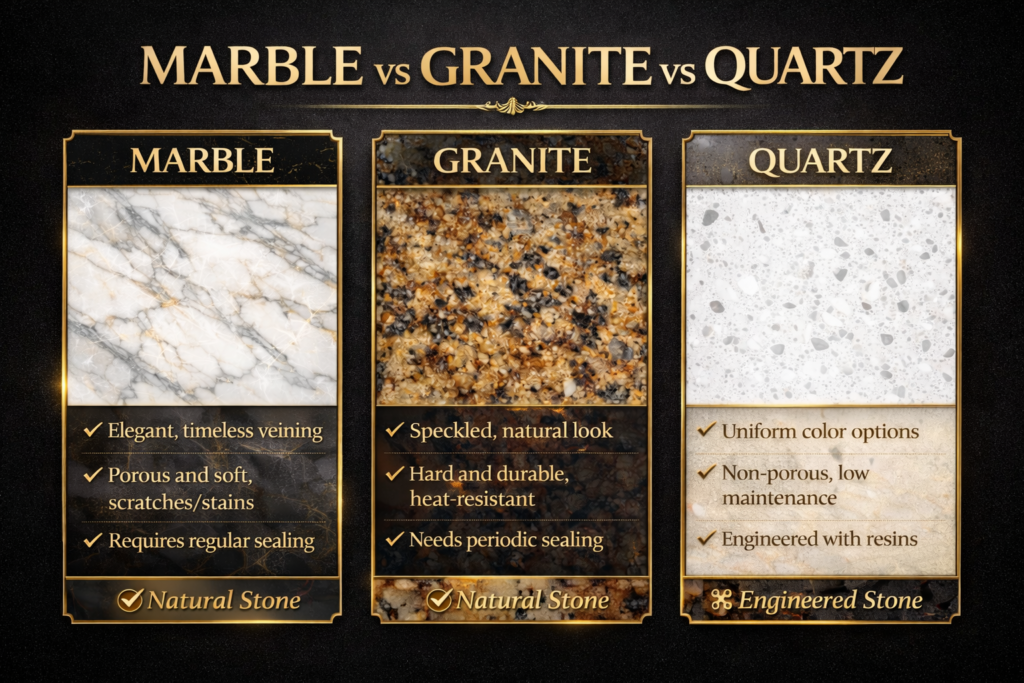
“If you want to make the right choice between Marble, Granite, and Quartz for your home, do read our detailed blog ‘Marble vs Granite vs Quartz: Which is better?’. There we have compared the durability, price, and maintenance of these three in the simplest way.”
Quartz Basic Information
What is Quartz?
Quartz is an engineered stone made from about 90–95% natural quartz crystals and 5–10% resin, pigments, and polymers. It is not a completely natural stone, but it looks like marble or granite and is more uniform and consistent in pattern.
How is Quartz made?
To make quartz, natural quartz crystals are finely ground and mixed with resin and pigments. This mixture is compressed under high pressure and heat, creating a strong, non-porous, and durable slab.
How many types of Quartz are there?
Quartz is available in different looks and finishes:
- Solid Colors: Pure White, Pure Black, Solid Grey.
- Marble Look Quartz: Calacatta Quartz, Statuario Quartz.
- Concrete Look: Industrial Grey, Cement Series.
- Stone Look: Granite inspired patterns.
- Sparkle Series: Fine glitter finish, premium appearance.
What is the difference between Quartz and Marble?
Marble is a 100% natural stone while Quartz is an engineered stone. Marble has natural veins and unique patterns, while Quartz patterns are more uniform and consistent. Quartz is non-porous so it doesn’t need sealing, while marble needs sealing from time to time.
What is the difference between Quartz and Granite?
Granite is a natural igneous rock while Quartz is an engineered stone. Granite is more heat resistant, while Quartz is easier to maintain because it is non-porous and stain-resistant.
Quartz Durability & Strength
How durable is Quartz?
Quartz is a very strong stone surface. It scores about 7 on the Mohs hardness scale, which is much higher than marble (3–4) and considered equal to granite.
Is Quartz scratch resistant?
Yes, Quartz is largely scratch resistant. Normal kitchen use doesn’t cause scratches on the surface, but it is better to use a cutting board.
Is Quartz heat resistant?
Quartz can withstand heat but it is not ideal for extreme heat. Placing very hot utensils directly can damage the resin layer, so it is better to use a hot pad or trivet.
Can Quartz crack?
Quartz is strong, but a very hard impact or heavy blow can chip or crack the edges. Therefore, caution is necessary during installation and handling.
Does water affect Quartz?
No. Quartz is a non-porous surface, so water, juice, or oil are not absorbed into it, and sealing is not required.
Quartz Kitchen Use & Countertop Guide
Is Quartz good for kitchen countertops?
Yes, Quartz has become a very popular choice for kitchen countertops because it is stain resistant, non-porous, and easy to clean.
Quartz or Granite for the kitchen — which is better?
Both are good for the kitchen. Quartz is low maintenance while Granite is heat resistant and a natural stone. The choice can be made according to your priority.
Quartz or Marble for the kitchen — which is better?
Quartz is considered more practical for the kitchen because it is non-porous and stain-resistant. Marble needs more maintenance and sealing.
Which Quartz is best for an Indian kitchen?
These Quartz designs are very popular in Indian kitchens:
- Calacatta White: Marble look, luxury feel.
- Absolute White: Clean modern look.
- Nero Black: Bold appearance, stains are less visible.
- Statuario Quartz: Italian marble-like pattern.
- Grey Concrete: Modern industrial style.
Does turmeric stain Quartz?
No. Quartz is non-porous, so stains from turmeric (haldi), oil, or masala are not easily absorbed. It is just better to clean spills quickly.
Quartz Use Cases & Applications
Is Quartz good for bathrooms?
Yes, Quartz is a good choice for bathroom vanity tops and wall panels because it is a moisture-resistant and hygienic surface.
Is Quartz good for flooring?
Quartz can technically be used in flooring, but it is primarily designed for countertops and vanity tops. Marble or granite are more practical for flooring.
Can Quartz be installed outdoors?
No. Quartz is not ideal for outdoor use because long-term UV exposure can cause its color to fade or discolor.
Is Quartz good for commercial spaces?
Yes. Quartz is widely used in hotels, offices, restaurants, and reception counters because it is a hygienic, durable, and low maintenance surface.
Quartz Technical Details
What should be the correct thickness of Quartz?
- Kitchen countertop: 18–20mm
- Bathroom vanity: 12–18mm
- Wall cladding: 12mm
- Commercial counters: 20–30mm
How much does Quartz weigh?
A 20mm Quartz slab weighs about 48–52 kg per square meter, which is similar to granite and marble.
How many types of Quartz finishes are there?
- Polished: Glossy mirror finish.
- Honed: Matte surface.
- Leathered: Textured premium look.
- Sandblasted: Rough anti-slip finish.
What are the grades in Quartz?
Quartz is generally placed into three categories:
- Entry Level: Basic colors, Indian brands.
- Mid Range: Italian-inspired designs.
- Premium: International brands like Silestone or Caesarstone.
Quartz Maintenance & Care
Does Quartz need to be sealed?
No. Quartz is a non-porous surface, so it doesn’t need sealing.
How to clean Quartz?
Cleaning quartz is easy—daily cleaning with mild soap and warm water is enough. Strong acidic or abrasive cleaners should be avoided.
Does Quartz stain?
Common stains do not affect Quartz because it is non-porous. However, strong chemicals or permanent markers can damage the surface.
Can Quartz be re-polished?
Light scratches can be slightly fixed with polish, but deep scratches or heat damage are difficult to repair.
How long does Quartz last?
A good quality Quartz surface can last 25–30 years or more if maintained correctly.
Quartz Price & Investment India
What is the price of Quartz in India in 2026?
The price of Quartz in India can range from approximately Rs.150 to Rs.1,500+ per sq ft. Indian brands are available around Rs.150–Rs.400, while imported brands can be Rs.500–Rs.1,500+.
What factors determine the price of Quartz?
The price of Quartz mainly depends on the brand, thickness, finish, color, and pattern complexity. Calacatta and Statuario patterns usually fall into the premium category.
What is the cost to install Quartz?
Kitchen countertop installation is generally around Rs.60–Rs.120 per sq ft, which includes cutting, edge profiling, and fitting.
Does Quartz increase property value?
Yes. In modern kitchens, Quartz countertops are very attractive to buyers and help increase property value.
Quartz vs Marble — which is a better investment?
Looking at the maintenance cost, Quartz is more economical in the long run because marble needs regular sealing and polishing.
Quartz vs Granite — which is cheaper?
Indian granite is generally cheaper than Quartz, but Quartz’s low maintenance cost can make it value for money in the long term.
Quartz Eco-Friendly & Health Benefits
Is Quartz eco-friendly?
Quartz is considered partially eco-friendly because it contains natural quartz mineral but resin and chemicals are also added.
Is Quartz hygienic?
Yes. Quartz is a non-porous surface, so there is less chance of bacteria, mold, and mildew growing in it.
Which flooring is best for hot climate in India?
For India’s hot climate, Marble flooring is the best choice. Marble stays naturally cool underfoot even in peak summer — this is why it has been used in Indian homes and palaces for centuries. It absorbs less heat compared to tiles or granite, making it especially comfortable in states like Rajasthan, Gujarat, and Maharashtra. Among marble options, Morwad White and Makrana White are the most preferred for hot climates due to their high reflectivity and natural cooling properties. If you prefer granite, P-White Granite also stays relatively cool and is a good alternative.
Arslan Stonex — Symbol of Trust & Transparency
Which is the most trusted place to buy Quartz?
“Arslan Stonex, Kishangarh (Rajasthan), is located in India’s largest natural stone hub, offering a premier selection of Indian and imported Quartz, Marble, and Granite. We provide a unique platform where you can compare all three materials side-by-side to make an informed choice, ensuring competitive pricing and a complete quality guarantee. For a deeper dive into making the right selection, explore our featured guide: “Marble vs Granite vs Quartz – A Quick Comparison”.”
Marble vs Granite vs Quartz — Full Comparison 2026
Which stone is easiest to maintain?
If zero maintenance is your priority, Quartz is the clear winner — it is non-porous, never needs sealing, and daily cleaning with mild soap is enough. Among natural stones, Granite is the easiest to maintain — it needs sealing only once every 1–3 years and resists stains, scratches, and heat very well. Marble requires the most attention — regular sealing, avoiding acidic cleaners, and careful handling. So the maintenance order from easiest to hardest is: Quartz → Granite → Marble.
| Feature | Marble | Granite | Quartz |
| Hardness | 3–4 (Fair) | 6–7 (Strong) | 7 (Strong) |
| Heat | Medium | Best | Burns |
| Stain | Porous | Good | Best |
| Sealing | 1–2 Years | 1–3 Years | Never |
| Lifespan | 100+ Years | 50–100 Years | 25–30 Years |
| Kitchen | Caution | Best | Good |
| Flooring | Best | Good | No |
| Outdoor | No | Best | No |
| Stairs | Caution | Best | No |
| Puja Room | Best | Good | Caution |
| Price | Rs.50–4,500 | Rs.40–1,000 | Rs.150–1,500 |
| Best For | Luxury | Strength | Zero Care |
“Marble, Granite, or Quartz? Make the right choice for your project with this expert guide from Arslan Stonex: ‘Marble vs. Granite vs. Quartz – A Quick Comparison.’ We have carefully analyzed each material to ensure you save both time and money on your investment.”
Why Choose Arslan Stonex?
Buying marble, granite, or quartz is a lifelong investment for your home — choosing the right supplier is just as important as choosing the right stone.
At Arslan Stonex, Kishangarh you get — Direct Quarry Sourcing (15–20% cheaper than market), everything under one roof — Indian marble, Italian marble, granite, and quartz, and 100% transparent pricing — no hidden charges, no billing tricks.
🛡️ Our Biggest Weapon — Written Quality Guarantee
Arslan Stonex is India’s only supplier that gives you a written guarantee — that every marble or granite supplied by us is 100% fresh and genuine. If you ever feel cheated or misled, you are completely free to take legal action.
“Trust the supplier who puts it in writing.”
“Disclaimer: The information provided in this blog is based on our personal experience and extensive knowledge of the natural stone industry. While we strive to provide the most accurate and up-to-date details, there may be possibilities of technical errors or changes in market trends. We recommend verifying all details personally before making any significant purchase or investment.”